
- What makes these examples worth copying
- 1. Dame: $26,000 more monthly revenue
- 2. ENDU: 307K to 345K euros monthly
- 3. ThruDark: $5,854 in 30 days
- 4. Torque Fitness: proving high-ticket equipment
- 5. TuffWraps: same results, $3,600 less per year
- 6. Fellow: product tours that cut returns
- 7. Vibe Kayaks: 80+ customer contributors
- 8. Good Fortune Puzzle Co: selling texture and finish
- 9. Maraux: showing true scale on the body
- 10. Terrera: fit and drape that cut returns
- What the best examples have in common
- How to copy this playbook
- Frequently asked questions
The fastest way to understand what shoppable video can do for a Shopify store is to look at brands already doing it well. Here are 10 real examples, with the numbers and tactics worth copying.

What Makes These Examples Worth Copying
Every brand on this list uses shoppable video the same fundamental way: real video content, tagged with products, placed where shoppers make decisions. None of them relies on expensive production. Most started with content that already existed on TikTok and Instagram, or content their own customers created.
The examples below fall into two groups. The first group has published revenue and conversion numbers that show what shoppable video produces when it is placed correctly. The second group shows how the tactic adapts across very different categories: fitness equipment, apparel, jewellery, puzzles, and outdoor gear. All of them run on Moast, so every example here is a placement you can replicate on your own store with the same tools.
If you want the strategic framework behind these tactics first, start with our guide to building a video commerce strategy for Shopify, then come back to see it applied.
1. Dame: $26,000 More Monthly Revenue From the Same Traffic
Dame, a sexual wellness brand, added shoppable customer videos directly to their product pages and measured the result carefully: $26,000 in additional monthly revenue and a $0.16 lift in revenue per visitor, with no increase in traffic.
The tactic worth copying is the placement discipline. Dame put video where purchase decisions happen, on the PDP, rather than burying it on a landing page. In a category where trust and discretion matter enormously, seeing real customers talk about products did what studio photography could not. Read the full Dame customer story for the breakdown.
2. ENDU: From 307,000 to 345,000 Euros Monthly With Identical Traffic
ENDU, a European fitness apparel brand, added shoppable video reviews to their product pages and watched monthly revenue climb from 307,000 to 345,000 euros with the same 100,000 monthly visitors.
The lesson is that shoppable video is a conversion tool, not a traffic tool. ENDU did not spend a single additional euro on ads. They made the traffic they already had convert better by showing real people wearing and training in the products. For apparel brands, video showing fit and movement on real bodies answers the questions that drive both hesitation and returns.
3. ThruDark: $5,854 in Directly Attributable Sales in 30 Days
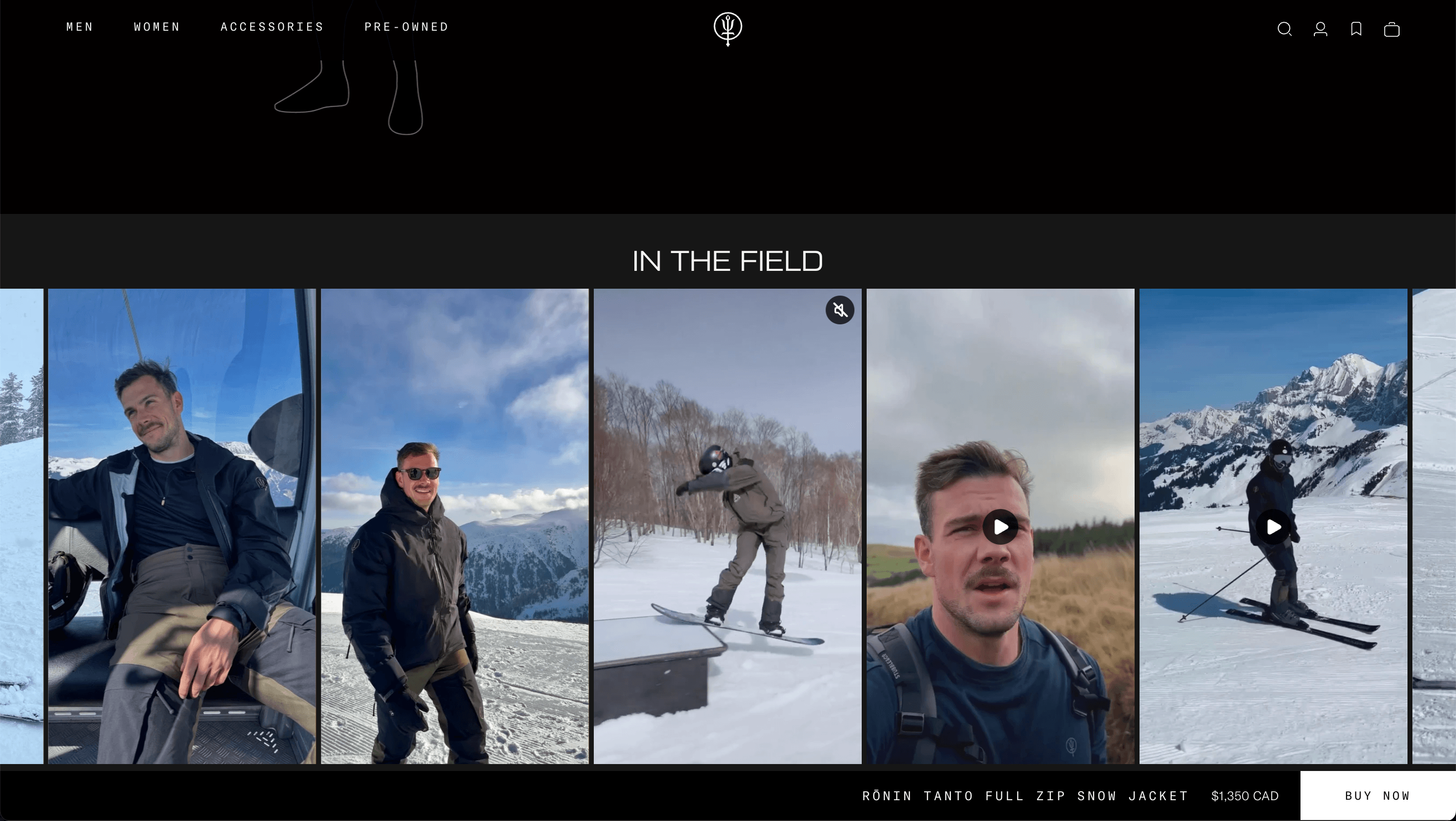
UK performance apparel brand ThruDark added a shoppable video carousel and generated $5,854 in directly attributable sales within the first 30 days. Their approach centres on using customer and field content to reinforce social proof exactly where shoppers evaluate the product. The full ThruDark customer story covers how they structure video on their PDPs.
The tactic worth copying is attribution. ThruDark tracked revenue from video specifically, which is how they knew within a month that the placement was paying for itself many times over. If you cannot measure what a video placement earns, you cannot scale it with confidence.
4. Torque Fitness: Proving High-Ticket Equipment With Real Training Footage
Torque Fitness sells racks, functional trainers, and sleds for home and commercial gyms, a category where the purchase is expensive, considered, and hard to evaluate from photos alone. Their shoppable video shows the equipment in actual use: real training sessions, real spaces, real movement.
The tactic worth copying is using video to answer the pre-purchase questions that stall high-ticket orders. How big is it really? How does it handle heavy use? What does it look like installed in a garage rather than a showroom? At high average order values, even a small conversion improvement from resolving those questions pays for the entire video setup many times over.
5. TuffWraps: Same Results, $3,600 Less Per Year
TuffWraps, a fitness accessories brand, is the cost-efficiency example on this list. After switching from Tolstoy to Moast, they migrated in minutes, kept their shoppable video experience, got unlimited video views, and eliminated roughly $3,600 per year in fees.
The tactic worth copying is auditing what your video app actually costs as you grow. View-based and tiered pricing models penalise the success shoppable video creates. Our 2026 shoppable video pricing breakdown covers exactly how the billing models compare, and the Moast vs Tolstoy comparison shows the specific trade-offs TuffWraps weighed.
6. Fellow: Product Tours That Reduce Support Tickets and Returns
Premium coffee gear brand Fellow uses shoppable video differently from everyone else on this list: as step-by-step product tours. Instead of static PDF guides, Fellow builds video walkthroughs that show customers exactly how to set up and use their gear, and saw a measurable reduction in post-purchase support tickets and returns as a result. The Fellow customer story shows how the tours are built.
The lesson is that shoppable video is not only a pre-purchase conversion tool. Video that helps customers succeed with a product after buying protects margin from two directions: fewer returns and fewer support hours. Customers who succeed with a product also reorder, which is why video plays a central role in increasing repeat purchase rate.
7. Vibe Kayaks: 80+ Customers Producing Content Continuously
Vibe Kayaks built a community of more than 80 active customer contributors who have produced 230+ pieces of on-the-water adventure content, generating over 10,000 monthly content views on their store. Customers submit videos of their own trips, and the library grows without the brand commissioning anything.
The tactic worth copying is the community framing. Vibe did not ask for reviews; they invited customers to contribute adventures to the Vibe Tribe. An identity-based ask consistently outperforms a transactional one. For the mechanics of building that kind of submission engine, see our guide to collecting customer video testimonials without asking twice.
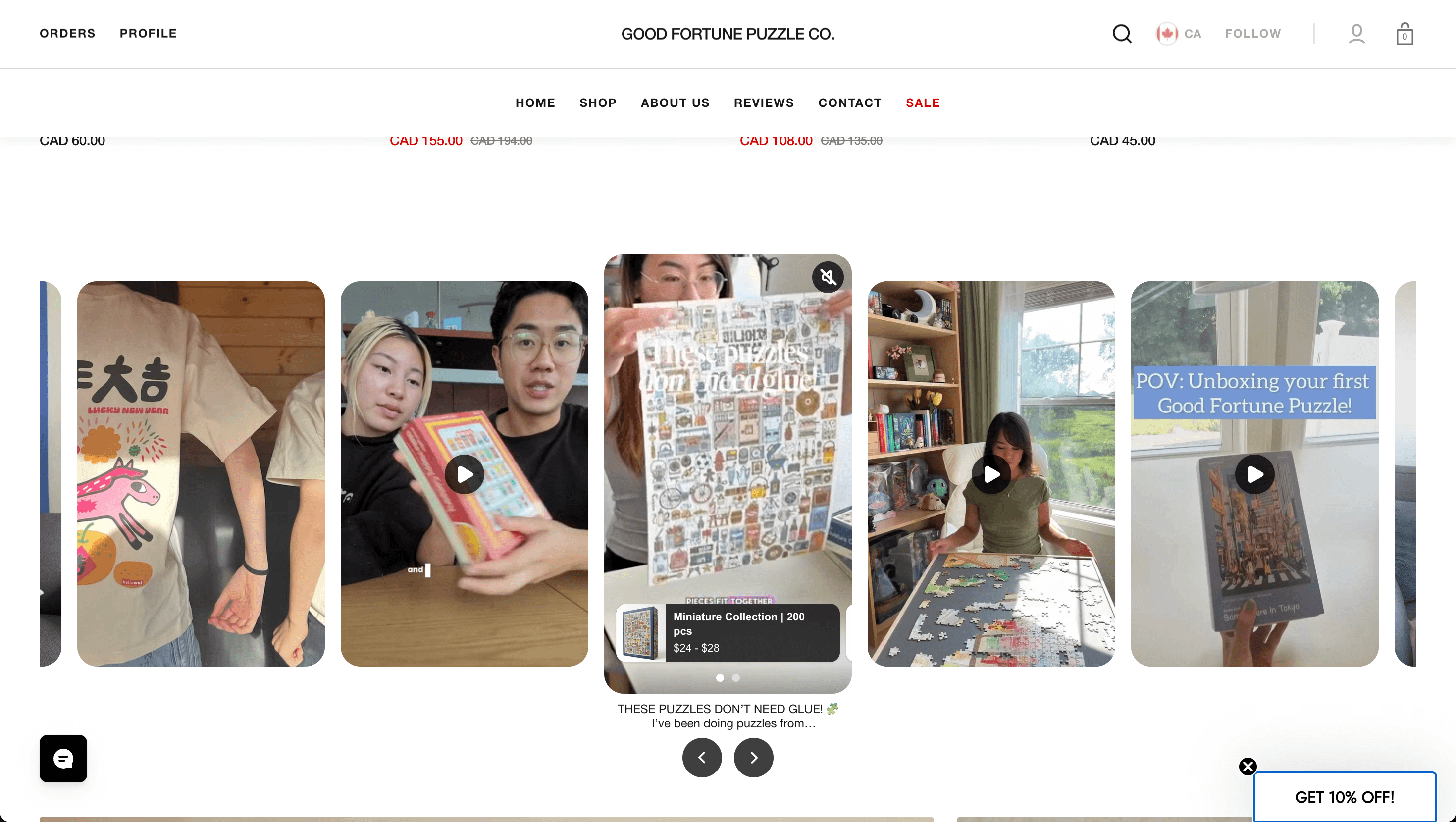
8. Good Fortune Puzzle Co: Selling Texture and Finish That Photos Cannot Show
Good Fortune Puzzle Co makes frame-worthy jigsaw puzzles celebrating culture, sustainably made in Canada with human-made art. Their shoppable video works because the qualities that sell a premium puzzle are tactile and temporal: the matte finish of the pieces, the satisfying fit, the moment the finished artwork comes together.
The tactic worth copying is using video for the product attributes a static image flattens. A photo shows the artwork; video shows the experience of assembling it, which is the actual product. For any brand whose product is experiential (games, craft kits, anything people do rather than merely own), showing the doing is the highest-leverage content available.
9. Maraux: Answering the One Question Jewellery Photos Cannot
Maraux, an Australian jewellery brand, uses shoppable video to solve the oldest problem in online jewellery: scale. Macro photography makes every piece look larger and every stone look brighter than reality, which drives both hesitation before purchase and disappointment after it.
Video of pieces being worn, moving, and catching real light shows exactly what arrives in the box. The tactic worth copying is on-body content for any product where proportion matters. Showing the product in real context sets expectations photography cannot, which lifts conversion on the front end and cuts returns on the back end.
10. Terrera: Showing Fit and Drape to Cut Hesitation and Returns
Terrera, a Canadian clothing brand, applies shoppable video to the core apparel problem: fit uncertainty. Fabric drape, stretch, and movement are precisely the qualities that flat product photography cannot communicate, and they are the top reasons shoppers hesitate or return.
The tactic worth copying is video showing garments on real bodies in real motion. Combined with product tags, that content turns the moment a shopper thinks that would work on me into an add to cart. Apparel brands consistently see the double benefit here: higher conversion from confidence, lower returns from accurate expectations.
What the Best Shoppable Video Examples Have in Common
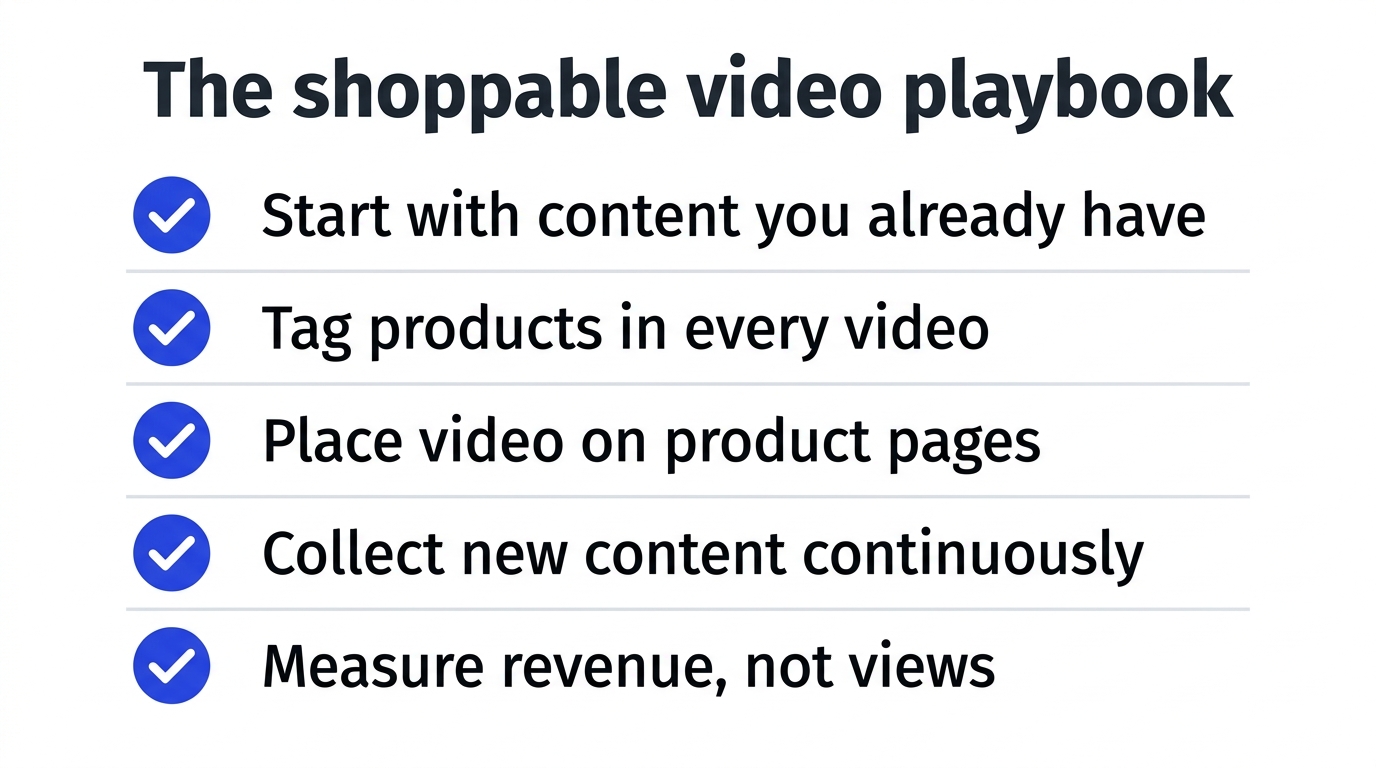
Across all 10 brands, five patterns repeat.
They place video where decisions happen. Every revenue result on this list came from video on product pages, not from video buried on a lookbook or about page. Placement drives outcomes.
They use real content, not produced content. Customer videos, creator clips, and imported TikToks and Reels outperform studio production for trust. Authenticity is the mechanism, as our complete guide to Shopify social proof covers in depth.
They make every video shoppable. Product tags turn watching into buying. Without tags, video is decoration.
They show what photos cannot. Torque Fitness shows equipment under real load, Maraux shows true scale on the body, Terrera shows drape in motion, Good Fortune shows the assembly experience. Each one picked the product truth photography flattens and put it on video.
They measure revenue, not views. Dame, ENDU, and ThruDark all know exactly what their video placements earn. Revenue attribution is what separates a strategy from a hunch.
How to Copy This Playbook on Your Own Store
You do not need a content team to start. The sequence that works:
Step 1: Use content you already have. Import your existing TikToks and Reels by URL, profile, or hashtag. Most brands discover they already have dozens of usable videos.
Step 2: Tag products in every video. This is the step that makes video shoppable rather than decorative.
Step 3: Place video on your highest-traffic product pages first. That is where Dame, ENDU, and ThruDark earned their results.
Step 4: Turn on continuous collection. Activate Social Sync to import new social content automatically, and set up a collection flow so customers can submit videos directly, the way Vibe Kayaks does.
Step 5: Track revenue per video. Double down on the placements and videos that convert.
Moast's free plan covers product tagging, TikTok and Instagram import, and unlimited video views, which is everything needed to replicate the first three steps at zero cost. Get started free and you can have your first shoppable videos live before your coffee goes cold.
Frequently Asked Questions
What is a shoppable video example?
A shoppable video example is a real implementation of video content with embedded product tags that let viewers buy directly from the video. The examples in this post include product page carousels (Dame, ThruDark), shoppable video reviews (ENDU), step-by-step product tours (Fellow), category-specific demonstrations (Torque Fitness, Maraux, Terrera, Good Fortune Puzzle Co), and community-generated content libraries (Vibe Kayaks).
Which Shopify brands use shoppable video best?
Standout Shopify brands using shoppable video include Dame ($26,000 additional monthly revenue), ENDU (38,000 euros more per month from identical traffic), ThruDark ($5,854 in attributable sales in 30 days), and TuffWraps ($3,600 in annual savings after switching apps), alongside category leaders like Torque Fitness, Terrera, Maraux, Good Fortune Puzzle Co, Fellow, and Vibe Kayaks.
What results can shoppable video produce on Shopify?
Documented results from the brands in this post include a $26,000 monthly revenue increase, a 38,000 euro monthly revenue increase with no traffic growth, and thousands of dollars in directly attributed sales within the first month. Results depend heavily on placement, with product pages producing the strongest returns.
How do I add shoppable video to my Shopify store?
Install a shoppable video app like Moast, import existing TikToks and Reels or upload your own videos, tag products in each video, and embed a widget on your product pages. Setup takes minutes and no code is required.
Do I need professional video production for shoppable video?
No. Every brand in this post relies primarily on authentic customer content, creator videos, or imported social content rather than studio production. According to PowerReviews research on consumer trust, user-generated content is trusted far more than brand-produced content, which is precisely why it converts.
Get started with Moast for free
Related reading: How much does shoppable video cost? The 2026 pricing breakdown · How to build a video commerce strategy for Shopify · How to increase Shopify repeat purchase rate with video
Related content
.jpg)
.jpg)
Turn your social content into a revenue channel
Turn your TikToks and Reels into shoppable videos and boost conversions by 3.5x.